
Practical guide
Normalize fleet bids without rewriting their scope
Separate shared setup from per-vehicle charges and retain every original assumption beside the comparison.
Read the guide: Normalize fleet bids without rewriting their scopeCommercial fleet project planning
See one-time charges, per-vehicle work and location assumptions together. Make the proposal conversation easier to follow.
Guaranteed response within 2 hours.Free planning tools and buyer downloads below.
A clear scope before the spend.
Free fleet bid cost normalizer below. Use the result with any wrap shop.
More useful project detail
Put shared charges, vehicle prices and exclusions on a consistent basis while preserving the scope differences that matter.

A visual you can keep
Preserve scope differences while separating shared and repeating charges.
Use the planning example from Chicago Fleet Wraps, download a copy, or read the related project guides.
Practical guide
Separate shared setup from per-vehicle charges and retain every original assumption beside the comparison.
Read the guide: Normalize fleet bids without rewriting their scopePractical guide
Give each unanswered or omitted item an owner, a scope reference and a clear next action.
Read the guide: Create a fleet bid exclusion registerPractical guide
Keep quantity, coverage and responsibility changes connected to the price revision they produce.
Read the guide: Track cost changes after a fleet proposal is revisedWhy put your business on a vehicle?
Know which panels, artwork, preparation and installation tasks are included.
Bring exclusions, removal needs and material specifications into the same conversation.
Use a clear brief and questions you can take to any wrap shop.
Picture the possibilities
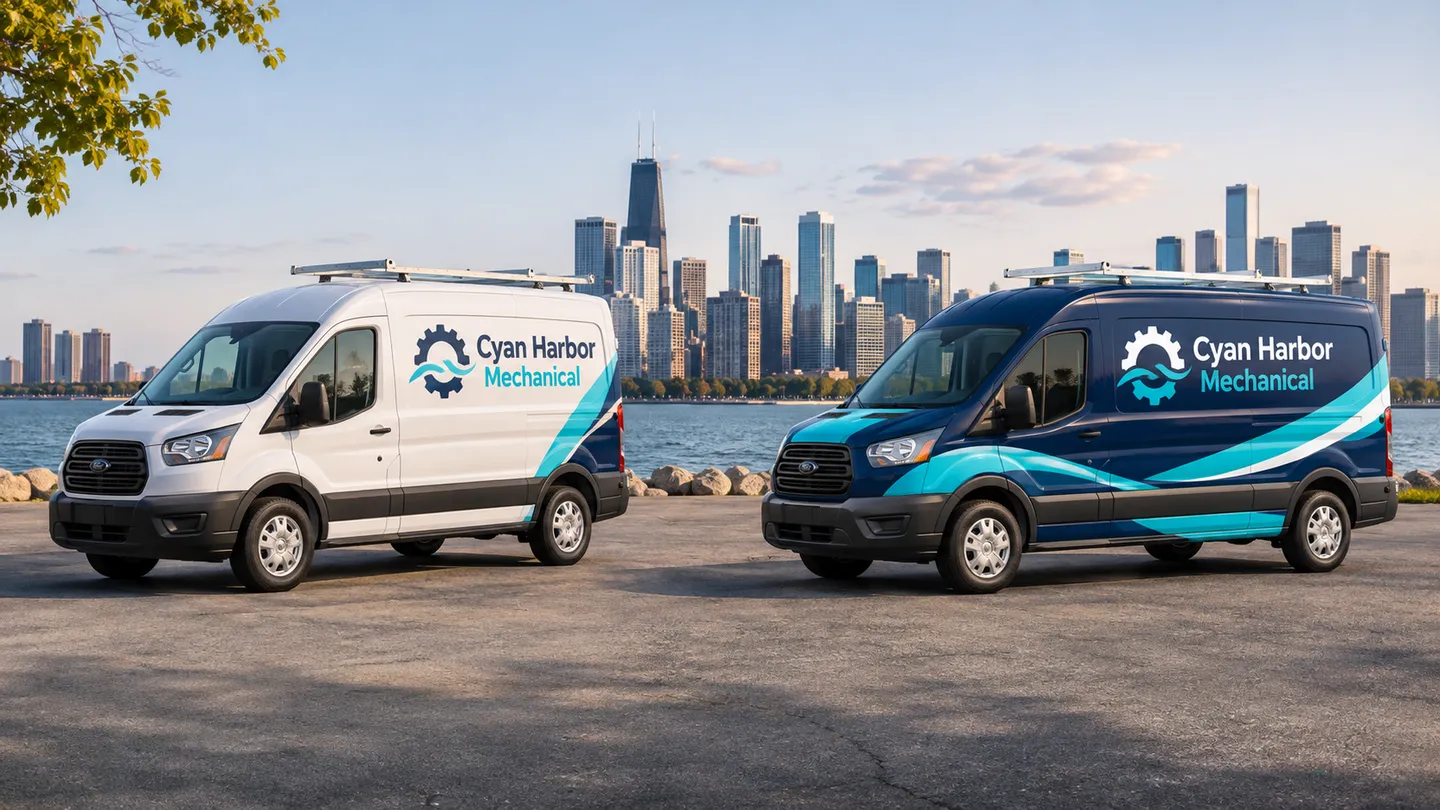
Look at the message, the coverage and the working views.
Cyan Harbor Mechanical is a fictional business. These generated design concepts illustrate ideas to discuss for your vehicles.
Plan the graphics for your vehiclesA clear scope before a price
Vehicle size, covered areas, artwork, preparation, existing graphics and the proposed material system all belong in the price discussion.
Useful when the priority is a clear name, service and contact route.
Discuss this scopeCompare the exact panels, message and finish with the full-coverage option.
Discuss this scopeConfirm the included painted panels and any exclusions on the actual vehicle.
Discuss this scopeRequest a price for the actual vehicles and agreed coverage. The free tools below help you compare the assumptions.
Let’s talk vehicles
Tell us how many vehicles you have. We’ll follow up about the vehicles, coverage, design and timing.
Guaranteed response within 2 hours.Know the next step
Guaranteed response within 2 hours. Final project pricing and dates follow review of the scope.
Name, email, phone and vehicle count. Share the project context through the free tool if it is useful.
Discuss the actual vehicles, coverage, artwork, existing graphics and timing.
Check the written scope and vehicle-specific artwork, including the business wording and included surfaces.
Confirm scheduling, preparation, review and the applicable care information.
The free tool
Use the example values to explore, then replace them with your project details.
One bid per line: name | price per vehicle | one-time costs | other entered costs | unpriced exclusions
Use the tool without sharing contact details. Entering a valid email or phone in the inquiry form saves your project entries, filenames, analysis and selected original files, even if unfinished. Original files: up to 50 MB each and 200 MB per batch.
6 vehicles, with unpriced exclusions still separate.
| Bid | Per vehicle | One-time | Other | Entered total | Unpriced exclusions |
|---|---|---|---|---|---|
| Bid A | $3,000.00 | $500.00 | $0.00 | $18,500.00 | Removal unpriced |
| Bid B | $3,100.00 | $0.00 | $250.00 | $18,850.00 | Travel unpriced |
Entered totals do not include unpriced exclusions. Confirm the same scope before comparing the numbers.
Ready to discuss the vehicles? Get fleet pricing. Save your result to use in that conversation.
Free tools for a better buying decision
A 12-page workbook with generic wrap concepts and fillable worksheets for coverage, quote comparison, budget, fleet availability, artwork, proof approval and vehicle records. Use it with any wrap shop.
Fill it in electronically or print it. No email needed.
Take this to any wrap shop
Print it off so you remember to ask. A practical checklist covering scope, materials, artwork, preparation, scheduling, warranty and handoff, plus questions for this project.
Confidence comes from the details
Use these checks when you review a proposal, a proof or a wrap shop. Keep the answers with your project.
Print the wrap-shop questionsSee the tradeoff
A lower per-vehicle rate can have a higher entered project total once setup costs are included.
Illustrative values, not a completed customer project.
6 vehicles, with unpriced exclusions still separate.
| Bid | Per vehicle | One-time | Other | Entered total | Unpriced exclusions |
|---|---|---|---|---|---|
| Bid A | $3,000.00 | $500.00 | $0.00 | $18,500.00 | Removal unpriced |
| Bid B | $3,100.00 | $0.00 | $250.00 | $18,850.00 | Travel unpriced |
Entered totals do not include unpriced exclusions. Confirm the same scope before comparing the numbers.
Leave with something useful
Separate shared costs, per-vehicle prices and extras. See which totals still have unpriced exclusions.
Compare my fleet bid costsBuild it from the project details you enter.
Keep the assumptions and open questions visible.
Copy, save or print the result for your next conversation.
Commercial wrap service
Define a fleet graphics inquiry by vehicle groups, artwork variations, current graphic condition, and proposed project locations. Mark what is confirmed and what still needs investigation. Ask which services and arrangements can be included, then review the proposal against those boundaries rather than against the fleet count alone.
A fleet total alone does not describe a graphics project. Two businesses with the same number of vehicles can have very different body styles, artwork requirements, existing graphics, and scheduling needs. This guide helps a buyer describe the boundaries of the work before discussing a proposal. It is designed for commercial fleets with more than one operating location as well as fleets based together. Geographic coverage, installation locations, and coordination arrangements must be confirmed rather than assumed.
Organize vehicles by characteristics that could change the discussion: body style, model configuration, equipment, existing graphics, or location. A row for each group is usually more informative than a long unstructured list. Give every group a name that local contacts can recognize and record whether the count is confirmed. Include vehicles expected to join the fleet separately from vehicles already available. This approach helps identify missing information early and makes it easier to discuss a partial project without implying that the entire fleet is included.
List the work you want to discuss and the conditions that may affect it. Existing graphics, artwork updates, damaged panels, or local contact variants should not disappear behind a general request for wraps. Where the condition is unknown, say so and keep photos ready. Identify work that belongs to a later phase rather than allowing it to be silently assumed. A clear boundary is useful both when a proposal is prepared and when your own team reviews what has actually been included.
Share where the vehicles are located and whether the business can move them. Ask which installation and coordination arrangements are available for the proposed project. Do not infer nationwide service, local facilities, or travel arrangements from a domain name. Clarify who would manage drivers, vehicle access, approvals, and communications at each location. Keep unresolved responsibilities visible so a central buyer does not mistake an outline conversation for a complete delivery plan. Specific agreements should guide any internal calendar or vehicle allocation decisions.
Buy with the questions answered
Check that both prices cover the same vehicle configuration, surfaces, artwork, preparation, material system, installation and removal needs. Ask for unresolved exclusions in writing.
Guaranteed response within 2 hours. The next conversation confirms the vehicle details, proposed coverage, artwork, existing graphics and timing so a project-specific scope can be discussed. Sending an inquiry does not reserve an installation date.
Review the covered surfaces, final business wording, vehicle-specific artwork, proposed material system, preparation and removal needs, price exclusions and agreed handoff. The free wrap-shop questions give you a record to use with any supplier.
Before you decide
For project-specific help, use the four-field inquiry form.
Get fleet pricingYes. Identify the vehicle groups included in the current inquiry and list later phases separately. Explain whether the first group is intended to establish an artwork approach for future vehicles. That gives the discussion a defined starting point without treating the whole fleet as a confirmed project.
Read the detailed guide: Normalize fleet bids without rewriting their scope
A shared identity can include approved variations, such as local contact details or unit numbers. Explain which elements must stay consistent and which may change. The actual artwork requirements should be discussed for each vehicle configuration rather than assuming one file fits every surface or body style.
Read the detailed guide: Normalize fleet bids without rewriting their scope
No. The planning guidance can help organize a multi-location fleet inquiry, but it does not establish available coverage in every market. Provide the actual locations involved and confirm which service arrangements can be considered before coordinating drivers, vehicles, or local business schedules around them.
Read the detailed guide: Track cost changes after a fleet proposal is revised
Use named vehicle groups, distinguish confirmed information from assumptions, and list any removal, artwork, or preparation questions explicitly. Review the proposed work against that record. If an item is not clear, ask whether it is included, excluded, or awaiting more information before approving the scope.
Read the detailed guide: Create a fleet bid exclusion register
Carry common colors, typography and messages across the fleet, then adapt placement to each vehicle. A layout that works on a trailer may need substantial changes on a cargo van.
3M sourcePreparation, coverage, vehicle shape, existing graphics and the installation team affect downtime. Obtain a project-specific schedule before committing vehicles to a fleet rollout.
3M sourceUnpainted or textured plastic, rubber and silicone need separate evaluation. 3M's vehicle guidance excludes or limits several of these surfaces for the films covered by that guidance.
3M sourceFinished-graphic coverage depends on the approved film, printing system, protection, application, geography and exposure orientation. A film brand alone does not establish the complete warranty.
3M sourceFor a fleet spanning several markets, share the actual locations and confirm available service arrangements for each proposed vehicle group. Tell us about your vehicles.